“In this guide, you’ll discover the best new AI tools in 2026 and which ones are actually worth your time.”
The Best new AI tools in 2026 are moving so fast right now that many people are no longer searching for the same old list of tools they saw last year. They want to know what is new, what is actually getting attention in 2026, and which tools are genuinely worth trying.
That is exactly why this list matters.
Instead of repeating the same names without context, this guide focuses on new and trending AI tools that people are actively curious about right now. Some are built for writing and research, some are made for design or coding, and others are becoming popular because they help people save time or create better work faster.
If you are a beginner, the goal is not to try everything. The goal is to understand which tools are rising, what they are best at, and where you should start first.
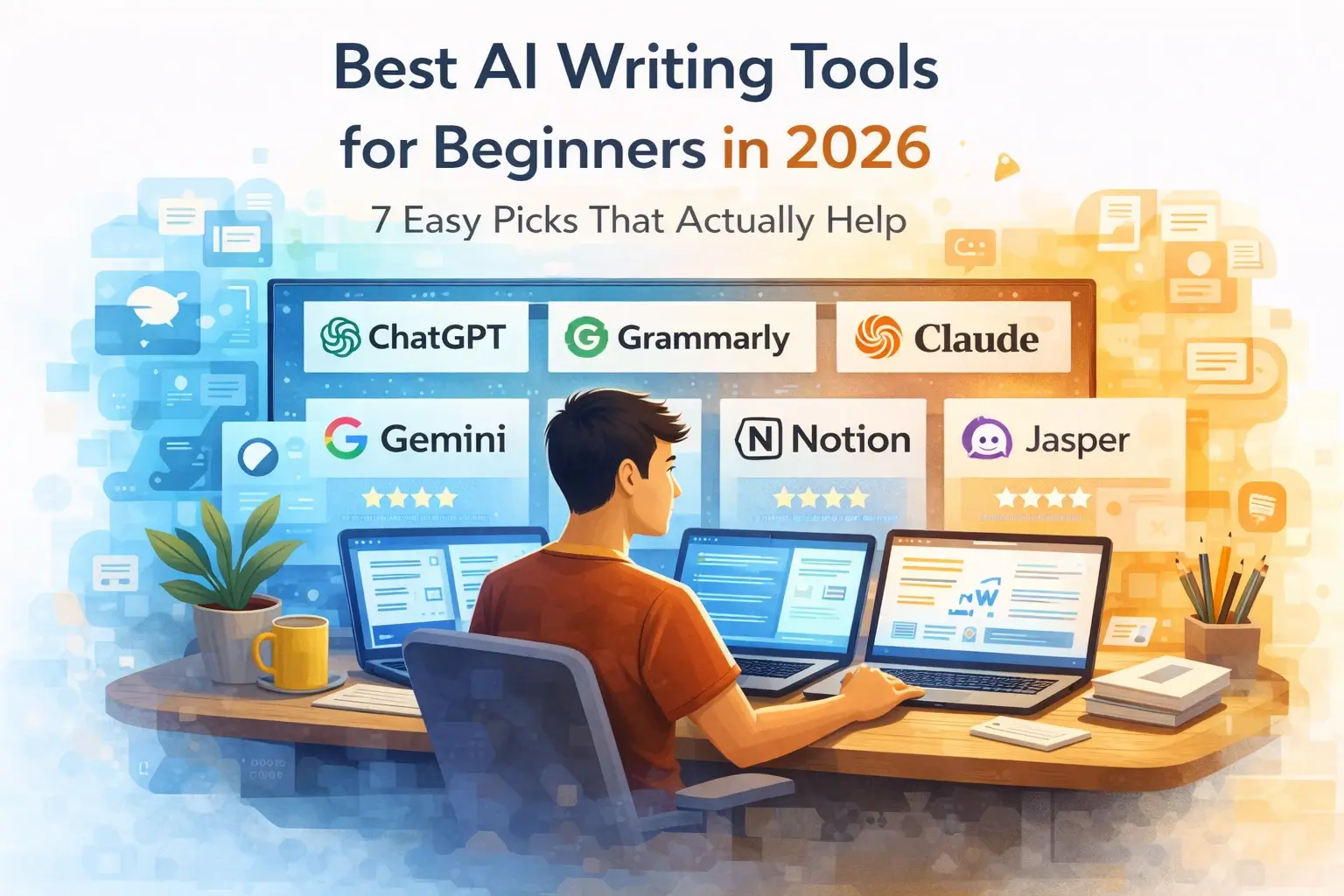
For writing-specific tools, check our detailed guide on the Best AI writing tools for beginners in 2026.
Why New AI Tools Are Exploding in 2026
AI in 2026 feels different from the earlier wave of simple chat tools. Many of the most talked-about products now are built around real workflows, not just one prompt and one answer. That includes long-context reasoning, agent-style task execution, UI generation, coding support, design help, and cinematic content creation.
For beginners, this creates both opportunity and confusion. The opportunity is obvious: better tools are becoming available faster than ever. The confusion is that not every trending tool is useful for everyone.
So below, I am not just listing names. I am helping you understand what each tool is good for, why people are talking about it, and whether it is worth your time.
Many of these tools can be used for blogging. Learn how in our Blogging with AI guide.

1. Claude
Claude has become one of the most talked-about AI tools for people who want stronger writing, deeper thinking, and better long-context work. Anthropic’s recent Claude Opus 5.5 announcement pushed even more attention toward Claude because of its focus on coding, long-running tasks, and larger context handling.
Best for
Writers, researchers, students, founders, and anyone who wants more thoughtful long-form output.
Why people are talking about it
Claude is getting attention because many users feel it performs well on reasoning-heavy work, structured writing, code review, and tasks that require handling larger amounts of information. That makes it especially attractive for people who are doing serious work and do not just want quick one-line answers.
Should beginners try it?
Yes, especially if your work involves writing, summarizing, research, or planning. Claude may feel more useful than a random collection of AI tools because it fits real day-to-day work.
If you’re new to Claude, read our Beginner-friendly Claude AI review to understand how it works.
2. ChatGPT Agent
ChatGPT is already well known, but what is driving fresh attention now is not just normal chat. It is the move toward more agent-like work. OpenAI describes ChatGPT agent as a system that can think and act using tools, complete tasks with its own computer, and help with things like research, slides, spreadsheets, and recurring workflows.
For beginners starting with ChatGPT, check our step-by-step guide on How to use ChatGPT effectively.
Best for
People who want help completing tasks, not just generating text.
Why people are talking about it
The big reason is simple: users are increasingly interested in AI that can do multi-step work. Instead of just asking a question, they want AI to research, organize, compare, and take action. That is why agent-style products are getting so much attention in 2026.
Should beginners try it?
Yes, but with realistic expectations. It is more powerful when you already know what outcome you want. Beginners can still use it well for structured tasks like research summaries, brainstorming, planning, and simple workflow help.
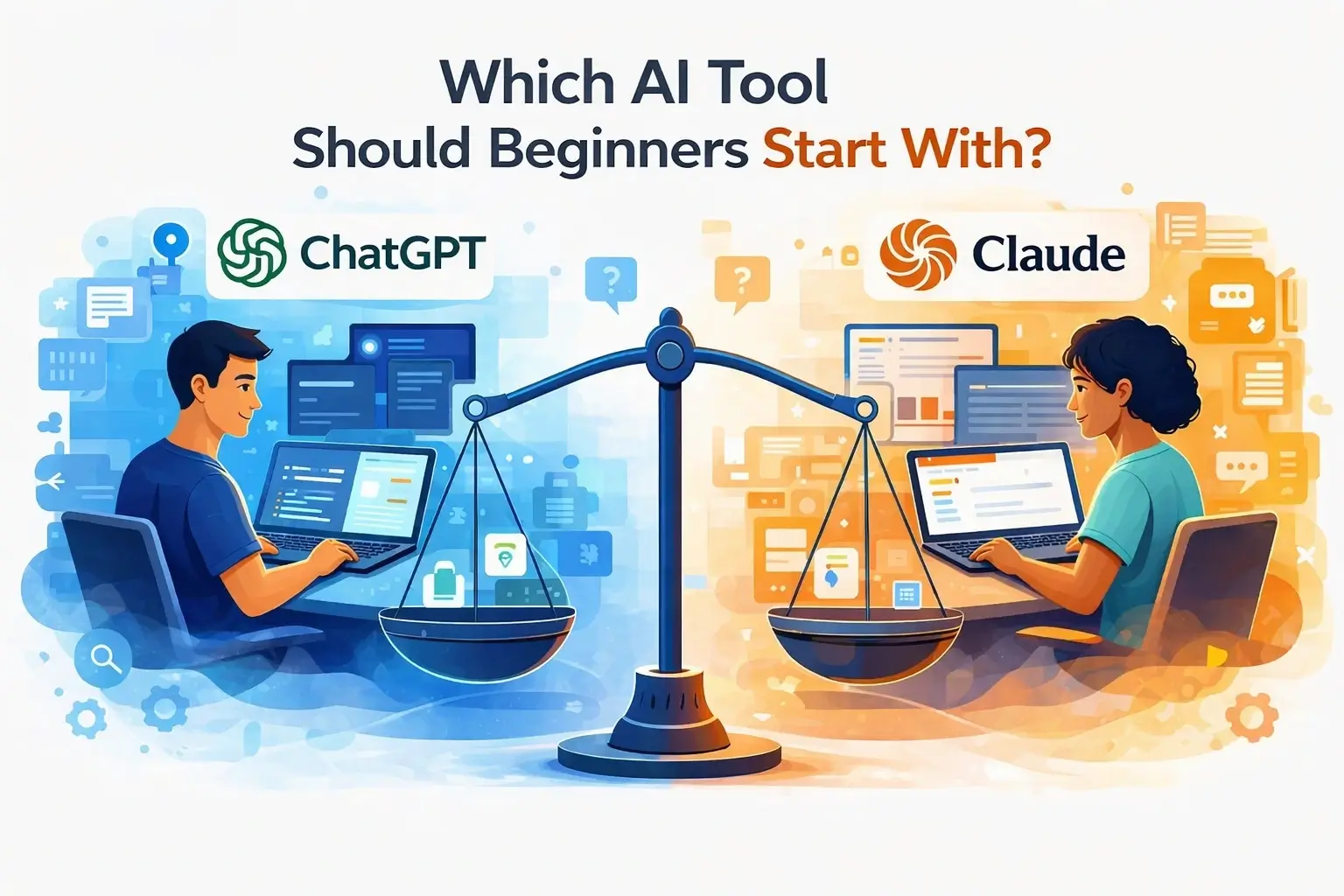
Not sure which one to start with? This ChatGPT vs Claude comparison will help you decide easily.
3. Google Stitch
Google Stitch is one of the most interesting AI tools for people who like product ideas, app concepts, and UI generation. Google has described Stitch as an AI-powered design tool that can generate high-quality UI designs and corresponding frontend code from natural language, images, or wireframes, and it can export work to CSS/HTML or Figma. More recently, Google also announced a redesigned, more AI-native Stitch experience.
Best for
Beginners, indie makers, designers, startup founders, and people who want to turn ideas into interface mockups faster.
Why people are talking about it
People are excited because Stitch sits at the intersection of design and AI. It is not just another chatbot. It helps turn ideas into something visual, which is exactly the kind of thing that feels fresh and practical right now.
Should beginners try it?
Yes, especially if you have ever wanted to build an app concept, landing page idea, or UI draft without starting from a blank screen.
If you want to know how to actually use these tools to generate real income, our beginner guide on How to Make Money with AI in 2026 walks through the most practical methods step by step.
4.Google Antigravity
Google Antigravity is not a mainstream beginner name yet, but it stands out because it points to where AI development is going next. Google describes it as an agentic development platform that enables developers to manage agents across the workspaces while keeping a familiar AI IDE (Artificial Intelligence Integrated Development Environment) experience.
Best for
Developers, technical builders, and people watching where agentic coding is heading.
Why people are talking about it
It is getting attention because it is part of a broader move from “AI helps with code” to “AI helps manage larger parts of the building process.” That idea is still evolving, but it is exactly the kind of trend serious AI watchers are paying attention to.
Should beginners try it?
Not as a first tool. If you are non-technical, this is more of a “watch this space” tool than a “start here today” tool.

5. Higgsfield
Higgsfield is becoming a notable name for creators who want cinematic AI visuals and video generation. On its official site, Higgsfield highlights AI video generation, image generation, motion control, and creator-focused visual effects, which is a big reason it is showing up more often in AI conversations.
Best for
Creators, video experimenters, visual storytellers, marketers, and people interested in AI-generated motion content.
Why people are talking about it
A lot of users are tired of hearing about the same old AI image tools. Video and cinematic generation feel newer, more exciting, and more likely to spread on social media. That is why video-first AI tools often generate strong curiosity.
Should beginners try it?
Yes, if you are interested in visual content and want to experiment. But do not start with it unless video creation is actually relevant to your goals.
To get the best results from tools like these, you need to write clear and effective prompts. Learn how in our beginner guide on How to write better prompts for AI.
6. Gemini
Gemini remains an important name because Google keeps pushing new capabilities into its AI ecosystem. Gemini new update helps with reasoning, multimodal understanding, agentic development capabilities, and stronger performance across developer workflows and vision tasks.
Best for
Users who want an AI assistant connected to Google’s wider product ecosystem.
Why people are talking about it
Gemini is not trending just because of branding. It stays relevant because Google keeps expanding what it can do across apps, models, and developer tools. That means it continues to matter even when newer names grab the spotlight.
Should beginners try it?
Yes, especially if you already use Google products heavily and want something familiar.
Many of these tools are used for content creation. Learn how in our AI content creation guide.
7. Perplexity
Perplexity continues to attract attention because many users now want faster answers with a research-style feel. Even though it is not the newest name on this list, it still belongs in a 2026 tools conversation because it best for people who wants direct answers, sources, and cleaner discovery.
Best for
Research, quick comparisons, and information-heavy questions.
Why people are talking about it
People like tools that reduce noise. Perplexity often appeals to users who want something between a search engine and an AI assistant.
Should beginners try it?
Yes. It is one of the easier tools to understand and can be useful even if you are just exploring AI for the first time.
To understand How to use these tools in daily life, check our guide on AI for daily productivity.
Which New AI Tool Should You Try First?
If you are a complete beginner, start simple.
- If you want better writing and structured thinking, start with Claude.
- If you want help doing multi-step work, explore ChatGPT agent.
- If you are interested in app ideas or design, try Google Stitch.
- If you care most about video and visual creativity, test Higgsfield.
- If you mainly want research help, Perplexity is one of the easiest places to start.
- If you are a student and want to know about best AI Tools for students. See our AI tools for students guide.
The smartest approach is not chasing every trend. It is picking one tool that matches your real goal and learning it properly.
If you’re interested in tools like Claude, check our complete guide on How to use Claude AI for beginners.
Final Thoughts
The best new AI tools in 2026 are not all trying to do the same thing. That is what makes this moment interesting.
Many of the above mentioned tools can help increase blog traffic. Learn How to get traffic to your blog using AI.
Some tools are becoming better at reasoning. Some are becoming better at design. Some are becoming better at coding, research, or creative production. For beginners, the biggest mistake is assuming that the most talked-about tool is automatically the best one for you.
It is better to ask a simpler question:
What do I actually want help with right now?
Start there, test one or two tools, and build your skills gradually. That approach will help you far more than jumping from one trend to another every week.
If you’re New to AI, start with our complete guide on How to use AI tools as a beginner in 2026 before trying advanced tools.
Frequently Asked Questions
What is the best new AI tool in 2026?
There is no single best tool for everyone. Claude is strong for writing and reasoning, ChatGPT agent stands out for task execution, Stitch is interesting for design, and Higgsfield is worth watching for AI video creation.
Which AI tool is best for beginners?
For most beginners, Claude, ChatGPT, Gemini, and Perplexity are easier starting points than highly technical platforms.
Are new AI tools better than older ones?
Not always. Newer tools often feel exciting, but the best choice depends on your goal. Some older tools are still more practical for daily use.
Should I try many AI tools at once?
No. Start with one or two tools that match your needs. Learn them properly before moving to the next.
Are these AI tools free or paid?
Most AI tools offer both free and paid plans. Free versions are great for beginners, but paid plans usually unlock advanced features like better output quality, higher usage limits, and faster performance.
Which AI tool is best for content creation?
Tools like Claude and ChatGPT are strong for writing blogs, scripts, and ideas. The best choice depends on whether you need creativity, accuracy, or speed.
How do I choose the right AI tool for my needs?
Start by identifying your goal—writing, design, research, or automation. Then choose a tool that specializes in that area instead of trying everything at once.
Are AI tools safe to use for work and business?
Yes, most popular AI tools are safe, but you should avoid sharing sensitive or confidential information. Always check privacy policies before using them professionally.

Hi, I’m Harshil Patel, founder of Arthify.
I share simple, practical guides on AI tools, blogging, and online earning to help beginners work smarter and grow online.
My goal is to simplify AI tools so anyone can build skills and create opportunities in the digital world.